AI Strategy

AI Models Are Only the Beginning: Why the AI Harness Is the Real Enterprise AI Challenge

Why context, tools, permissions, memory, and governance matter when AI moves from answering to acting.

12 min read
Back to Blog
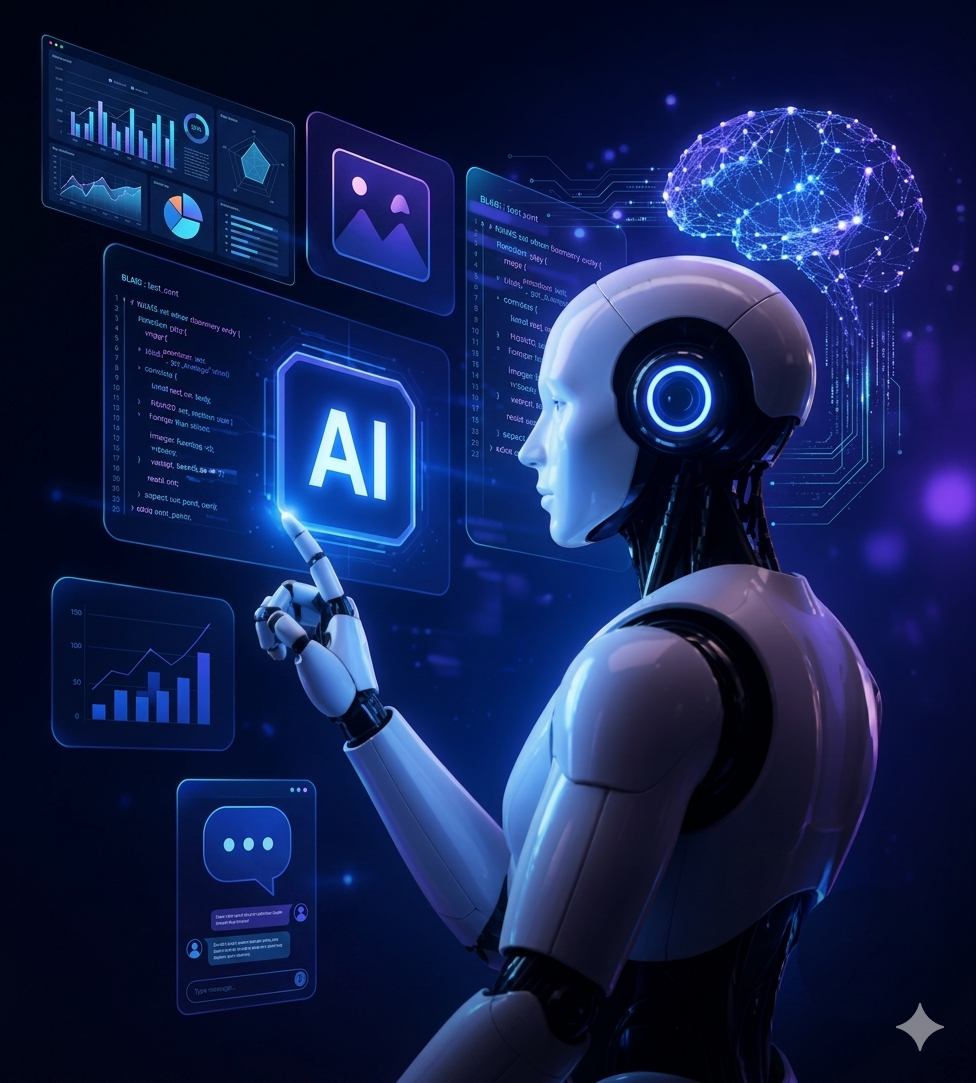
AI Harness for Enterprise AI — AIplay Technologies
8 Core Harness Capabilities
11 Workflow Steps Automated
Full Human Oversight Maintained
Secure Enterprise-Grade Control
Key Insight
The AI model provides intelligence. The harness provides the environment, rules, tools, memory, and controls that make that intelligence useful — and safe.

Artificial Intelligence has entered a new phase.

For the past few years, the conversation was largely about which AI model is best. Which model writes better? Which model reasons better? Which model is faster? Which model is cheaper?

Those questions still matter. But for businesses moving from AI experiments to real-world implementation, a more important question is emerging:

What surrounds the AI model and enables it to work safely inside the business?

This is where the concept of an AI harness — also called an agent harness — is becoming increasingly important.

Microsoft now describes an agent harness as the runtime scaffolding that allows a model to work through multi-step tasks, manage context and state, use tools, apply approvals, and continue working toward a goal. OpenAI is similarly investing in infrastructure around agent loops, sandbox execution, tools, and long-running tasks.

In simple terms: the AI model provides intelligence. The harness provides the environment, rules, tools, memory, and controls that make that intelligence useful. And for Enterprise AI, that distinction is becoming critical.

What Is an AI Harness?

Imagine you hire an extremely capable employee. They may be intelligent, fast, and able to solve difficult problems. But on their first day, you cannot simply tell them: "Go run the company."

You need to give them the right systems access, knowledge about the business, permission to perform certain actions, rules they must follow, a history of previous work, tools to complete tasks, a way to ask for approval, and a way to record what they did.

An AI agent is similar. A Large Language Model can understand instructions and generate intelligent responses. But to perform meaningful enterprise work, it needs an environment around it. That environment is the AI harness.

The Production AI Agent Equation

AI Model Intelligence & reasoning
+ Context & Memory
+ Tools & Permissions
+ Workflow & Guardrails
+ Monitoring & Oversight
= Production AI Agent

Why the Model Alone Is Not Enough

Consider a simple business instruction: "Contact all customers whose invoices are overdue by more than 30 days."

A language model can easily write a professional payment reminder. But writing the email is only one small part of the actual business process.

The Point
The LLM is involved, but it is not the entire solution. The surrounding architecture is what turns a clever response into a reliable business workflow.

What the system must also do — 11 steps beyond writing the email

  1. 1 Find the correct customers by querying the ERP or CRM with appropriate access controls
  2. 2 Check which invoices are actually overdue by connecting to the billing system
  3. 3 Respect the user's access permissions so only authorised data is processed
  4. 4 Retrieve contact information from verified, current business records
  5. 5 Understand customer-specific context including account history, previous interactions, and credit terms
  6. 6 Generate an appropriate message personalised to each customer's situation
  7. 7 Decide which communication channel is allowed based on customer preferences and business rules
  8. 8 Obtain approval where required before any communication is sent
  9. 9 Send the communication through the approved channel or system
  10. 10 Record the result in the CRM or audit log for traceability
  11. 11 Handle failures or exceptions such as bounced emails, missing contacts, or escalation triggers

8 Capabilities a Production AI Harness Manages

A useful enterprise AI harness is not a single feature — it is an environment that manages several interdependent capabilities so the AI agent can work reliably inside a real business.

1. Context

Retrieves and prepares the right business information — customer records, invoice status, previous interactions, applicable terms — before the model is asked to act. Critical when AI integrates with ERP, CRM, and internal databases.

2. Memory

Maintains session state, previous decisions, completed steps, and relevant history across long-running tasks. Memory governance — who sees what, for how long — is just as important as memory itself.

3. Tools

Gives the agent controlled access to ERP APIs, CRM systems, databases, document repositories, email, messaging, search, and reporting engines. This is where Enterprise AI becomes genuinely integrated with business operations.

4. Permissions

Enforces the same security boundaries as the business application. A finance manager may view balances; a sales representative should not. The AI must operate within defined, role-based access controls.

5. Guardrails

Defines what the agent can access, which actions it can perform, what information it may retrieve, and what requires human approval. Includes data masking, policy enforcement, logging, and network controls for sensitive environments.

6. Orchestration

Manages multi-step task sequences — what happens next, what information is needed, which tool to use, and whether the task can continue automatically. The harness determines the path from intent to outcome.

7. Human Approval

Builds approval checkpoints directly into the agent runtime for actions that carry greater risk. The right design is often: AI prepares, human approves, system executes — providing a practical balance between automation and control.

8. Monitoring & Auditability

Tracks what the agent did, which data it accessed, which tools it called, which model it used, what the result was, and whether a human approved. The more autonomous the system, the more important traceability becomes.

A chatbot can disappear after generating an answer. An enterprise agent cannot. Production AI needs observability built in from the start.

— AIplay Technologies

A Simple AI Harness Architecture

The model is only one part of the architecture. The harness is what makes the model usable in a real business environment — connecting the user's intent to a governed, auditable business action.

Without the harness layer, the AI model receives a prompt and returns a response. With the harness, that response becomes a controlled, traceable business workflow.

  • Business user intent flows down through the harness to the model
  • Model output flows up through the harness as governed business actions
  • Every layer applies rules, permissions, and logging
Business User
Enterprise Application — ERP / CRM / Portal
AI Harness
Context
Memory
Tools
Permissions
Guardrails
Orchestration
Approvals
Monitoring
AI / LLM
Business Action / Result

Why This Matters for Legacy Systems

This becomes even more important when AI is integrated with existing ERP, CRM, and legacy applications. A business does not want to give an AI model unrestricted access to its database.

Instead, the AI harness can act as an intelligent control layer that sits between the existing environment and the model.

This approach allows organisations to preserve their existing systems while introducing AI capabilities around them — without replacing core ERP or CRM platforms simply to adopt AI.

Secure AI Integration Layer

Legacy ERP / CRM

Existing systems preserved

Harness Control Layer

Context Security Tools

AI / LLM

Approved actions only

This approach is especially useful for organisations that

  • Have large investments in mature ERP and CRM platforms
  • Cannot afford to replace core systems simply to adopt AI
  • Operate in regulated industries where data governance is mandatory
  • Need AI that respects existing access controls and security boundaries
  • Want to introduce AI incrementally without disrupting live operations
  • Require full audit trails for every AI-assisted action

AI Harness vs. AI Model vs. AI Agent

A simple analogy makes the distinction easier. Each component plays a distinct and necessary role in production enterprise AI.

AI Model

The Brain

Understands language, analyses information, reasons through problems, and generates intelligent output. The model is the intelligence layer — but without the harness, it cannot act safely inside a business.

Language Understanding Reasoning Generation
AI Harness

The Operating Environment

Provides context, tools, memory, permissions, rules, workflow, approvals, security, and monitoring. The harness is what makes the model useful — and safe — inside your organisation.

Control Capability Governance
AI Agent

The Worker

Combines the model and harness to pursue a business goal and perform real work. The agent is intelligence in action — operating within the boundaries and with the capabilities the harness provides.

Goals Multi-step Tasks Business Actions

Model = Intelligence Harness = Control + Capability Agent = Intelligence in Action

— AIplay Technologies

Why This Is Becoming a Bigger Enterprise Issue

AI models are becoming increasingly accessible. Businesses can now choose from many powerful models and model providers.

That means model access itself may become less of a differentiator. The greater challenge is building the infrastructure around those models.

The term "AI harness" is increasingly being used to describe the software layer that provides memory, context, tools, permissions, approvals, and execution around a model — reflecting a broader industry shift in how enterprise AI is understood.

The new question businesses need to ask

OLD

Which AI model should we use?

First-generation enterprise AI thinking — focused on model selection

NEW

What should the AI be allowed to know, what should it be allowed to do, and how should we control it?

This is the harness question — and it is becoming the more important one

The model may provide the intelligence. The harness determines how that intelligence behaves inside your organisation.

Where AIplay Sees the Opportunity

At AIplay Technologies, we see Enterprise AI as an integration challenge — not simply a model-selection challenge. Our work increasingly focuses on the layer between AI models and business systems.

Enterprise AI Agents

Connecting AI to business workflows so agents can perform meaningful tasks instead of simply answering questions — from data retrieval to multi-step approvals.

ERP & Legacy-System Integration

Connecting AI with existing ERP, CRM, and enterprise applications without forcing organisations to replace core systems that represent years of investment.

Local LLM

Deploying AI within controlled enterprise environments when data must remain inside the organisation's network — without relying on external cloud model providers.

Secure AI Data Layer

Controlling how enterprise information is exposed to AI through mechanisms such as data masking, governed access, and role-based context policies.

MCP & Tool Integration

Providing AI agents with controlled access to the systems and tools required to perform business work — using the Model Context Protocol and governed APIs.

AI Audit & Assessment

Identifying where AI should actually be applied before organisations invest heavily in implementation — avoiding the common failure of deploying AI without a clear business case.

A Real-World Example

Consider an accounting firm using an ERP. The firm's employees already have access to customer records, invoice data, documents, tasks, compliance information, and reports.

Instead of introducing a separate AI application, an AIplay-style architecture places an AI harness around the existing environment.

User Request

"Identify clients with outstanding compliance documents and prepare a reminder for each one."

The Key Point
The LLM is only one component of this workflow. The harness makes the entire workflow possible.

What the AI harness does — step by step

1 Understands the intent — parses the request and determines the required action and data sources
2 Queries approved ERP data — retrieves only the records the user is authorised to access
3 Identifies matching clients — filters records to those with outstanding compliance documents
4 Retrieves relevant context — gathers each client's history, document status, and communication preferences
5 Applies permissions and security policies — ensures no data is exposed beyond what the role allows
6 Generates personalised messages — the LLM drafts a tailored reminder for each client using the context provided
7 Presents them for approval — the user reviews the draft messages before anything is sent
8 Sends through the approved channel — dispatches messages via email, portal, or other authorised method
9 Records the communication — logs the full interaction in the ERP and audit trail for compliance

The Future Will Be Decided by the Smartest Environment — Not Just the Smartest Model

Powerful AI models are becoming easier for businesses to access. But access to a powerful model does not automatically create an intelligent enterprise.

To make AI useful in production, organisations need to surround the model with context, memory, tools, permissions, security, workflow, human oversight, and monitoring.

That is the emerging role of the AI harness. The future of Enterprise AI will not be decided only by who has the smartest model. It will increasingly be decided by who builds the smartest, safest, and most business-aware environment around that model.

About AIplay Technologies

We help organisations connect AI with their existing applications, data, workflows, and infrastructure — securely and practically. Our focus is on the integration layer between AI models and real business systems.

Start with a Free AI Assessment

From Model Selection to Harness Design

The first generation of Enterprise AI asked: which model should we use? The next generation needs to ask: what should the AI be allowed to know, what should it be allowed to do, and how should we control it?

As AI becomes more autonomous, the harness becomes increasingly important — and increasingly the competitive differentiator for organisations that get it right.

Context-Aware Memory-Governed Tool-Enabled Permission-Bound Human-in-Loop Fully Auditable Legacy-Compatible Enterprise-Secure

Related Articles

Ready to Build the Right Environment Around AI?

Book a free AI consultation and discover how an AI harness can connect your existing systems to intelligent, governed automation — no commitment required.

Book Free AI Consultation

Published: August 2026 — Enterprise AI harness insights from AIplay Technologies, Ahmedabad, India.